 +91
+91 


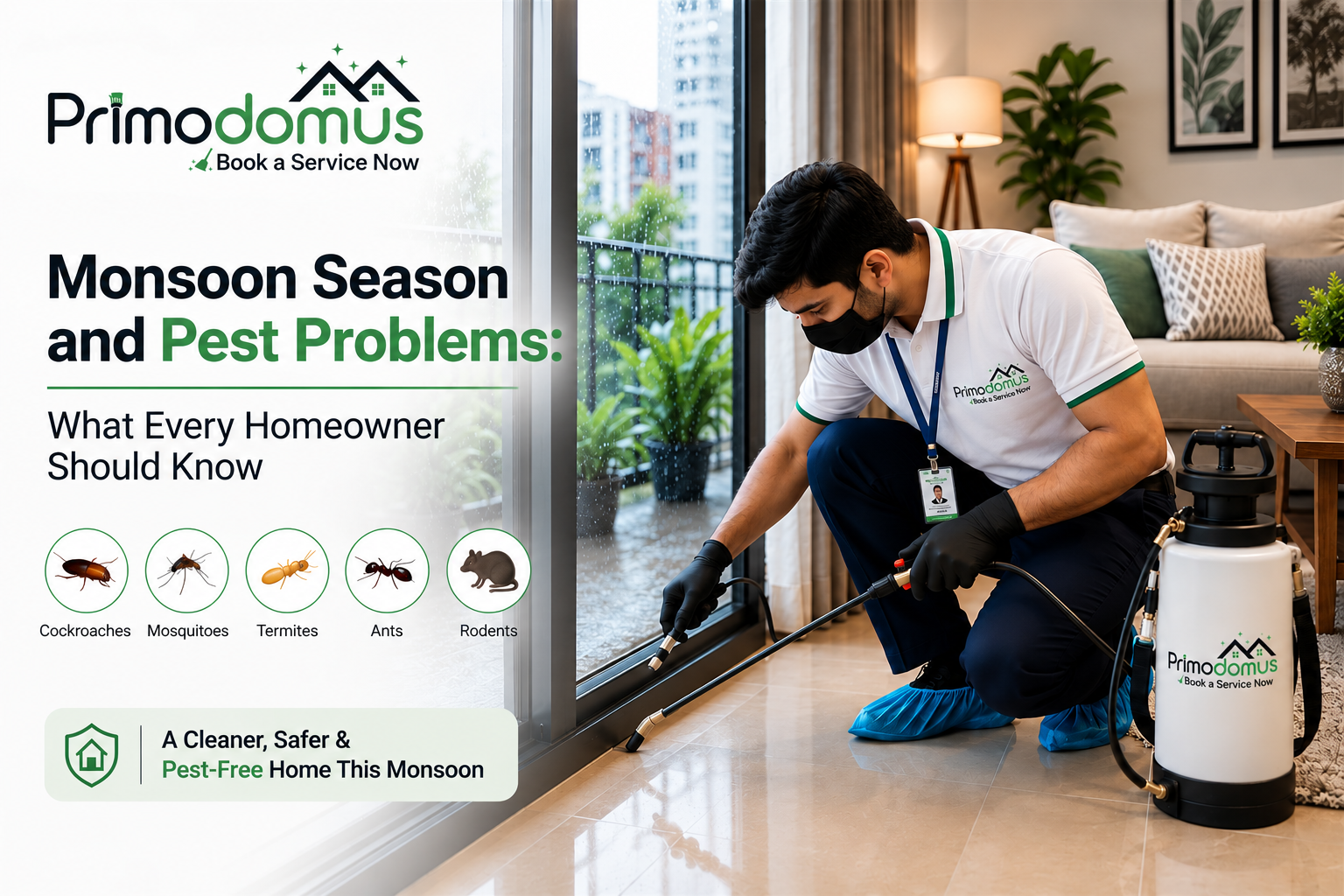
Monsoon Season and Pest Problems: What Every Homeowner Should Know
- August 01, 2026
- Primodomus Team
- Pest Control
For many of us, the monsoon brings a welcome break from the summer heat. The rain cools the air, plants turn greener, and everything feels refreshed. But while we enjoy the change in weather, pests see the rainy season very differently.
Heavy rainfall forces many insects and rodents to leave their outdoor hiding places in search of food, warmth, and shelter. Unfortunately, our homes often become the perfect destination.
If you've suddenly started noticing more cockroaches in the kitchen, mosquitoes around your bedroom, ants near the pantry, or even signs of termites, you're not alone and you also need Pest control services. Monsoon is one of the busiest seasons for pest activity, making it the ideal time to protect your home before a small problem turns into a larger infestation.
Why Do Pests Increase During the Monsoon?
Rainwater floods drains, gardens, and underground spaces where many pests usually live. As their natural habitats become wet, they begin looking for dry, safe places to survive.
Homes provide exactly what they're looking for:
- Food
- Water
- Warm indoor temperatures
- Dark corners
- Small entry points
Even tiny gaps around doors, windows, or pipes can become easy entry routes for unwanted pests.
The Most Common Monsoon Pests
Cockroaches
Cockroaches thrive in warm, damp environments. Kitchens, sinks, drain pipes, and storage cabinets become ideal hiding spots during the rainy season.
If you spot one cockroach during the day, there's a good chance more are hiding nearby.
Mosquitoes
Rainwater collecting in flower pots, buckets, coolers, and blocked drains creates the perfect breeding ground for mosquitoes.
Regularly checking your surroundings for standing water is one of the easiest ways to reduce mosquito activity.
Termites
Moisture softens wooden surfaces, making them more attractive to termites. Because termites often work silently behind walls or inside furniture, the damage usually becomes visible only after it has spread.
Early inspections can help prevent costly repairs.
Rodents
Heavy rain often drives rats and mice indoors through drainage systems, garages, and small wall openings.
Besides damaging food and property, rodents can also contaminate surfaces and spread harmful bacteria.
Ants
Ants frequently enter homes searching for dry shelter and easily available food. Even small crumbs on countertops or dining tables can attract entire colonies.
Keeping food sealed and surfaces clean helps reduce their activity.
Simple Ways to Protect Your Home
While no home is completely immune to pests, a few preventive steps can make a big difference.
- Repair cracks around doors and windows.
- Avoid storing standing water.
- Keep kitchen counters clean after cooking.
- Empty dustbins regularly.
- Store food in airtight containers.
- Fix leaking taps and pipes.
- Trim plants touching exterior walls.
- Keep storage areas dry and well-ventilated.
Small maintenance habits can significantly reduce the chances of pests settling inside your home.
When Should You Call Professional Pest Control?
Seeing one or two insects occasionally during the monsoon isn't unusual. However, repeated sightings, unpleasant odours, droppings, damaged wooden furniture, or visible termite mud tubes often indicate a larger issue.
Professional pest control helps identify the source of the problem instead of simply treating what you can see.
At Primodomus, we focus on effective pest management solutions designed to protect homes from seasonal infestations while helping families maintain a cleaner and healthier living environment.
Final Thoughts
The monsoon brings fresh air and cooler weather, but it also creates the perfect conditions for pests to enter your home. Taking preventive action before an infestation grows is always easier—and often less expensive—than dealing with a serious pest problem later.
A little preparation during the rainy season can go a long way toward keeping your home comfortable, hygienic, and pest-free.
Frequently Asked Questions
Why do pests become more active during the monsoon?
Heavy rainfall floods their natural habitats, forcing insects and rodents to seek dry shelter inside homes and buildings.
Which pests are most common during the rainy season?
Cockroaches, mosquitoes, termites, ants, and rodents are among the most common pests seen during the monsoon.
Can a clean home still attract pests?
Yes. Even well-maintained homes can attract pests if they have moisture, standing water, food sources, or small entry points.
When should I consider professional pest control?
If you notice recurring pest activity, termite signs, rodent droppings, or increasing insect sightings, it's a good time to schedule a professional inspection.